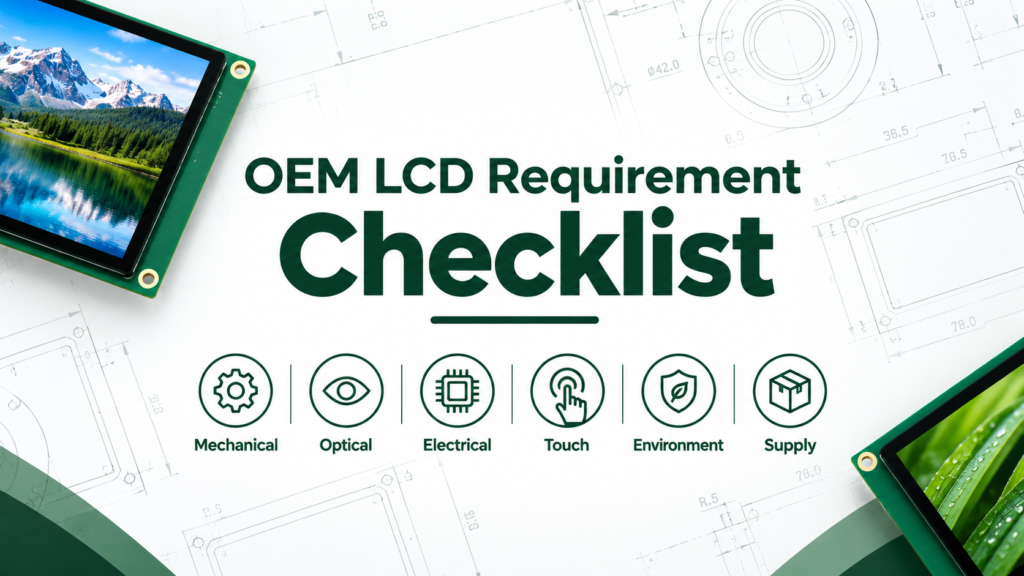
LCD Display Requirement Checklist for OEM Projects
An LCD is not an isolated component. It must fit the enclosure, connect to the electronics, remain readable in the operating environment and stay available throughout the product lifecycle. An OEM display checklist helps engineering, purchasing and product teams agree on
the requirements before samples are ordered or a module is approved.
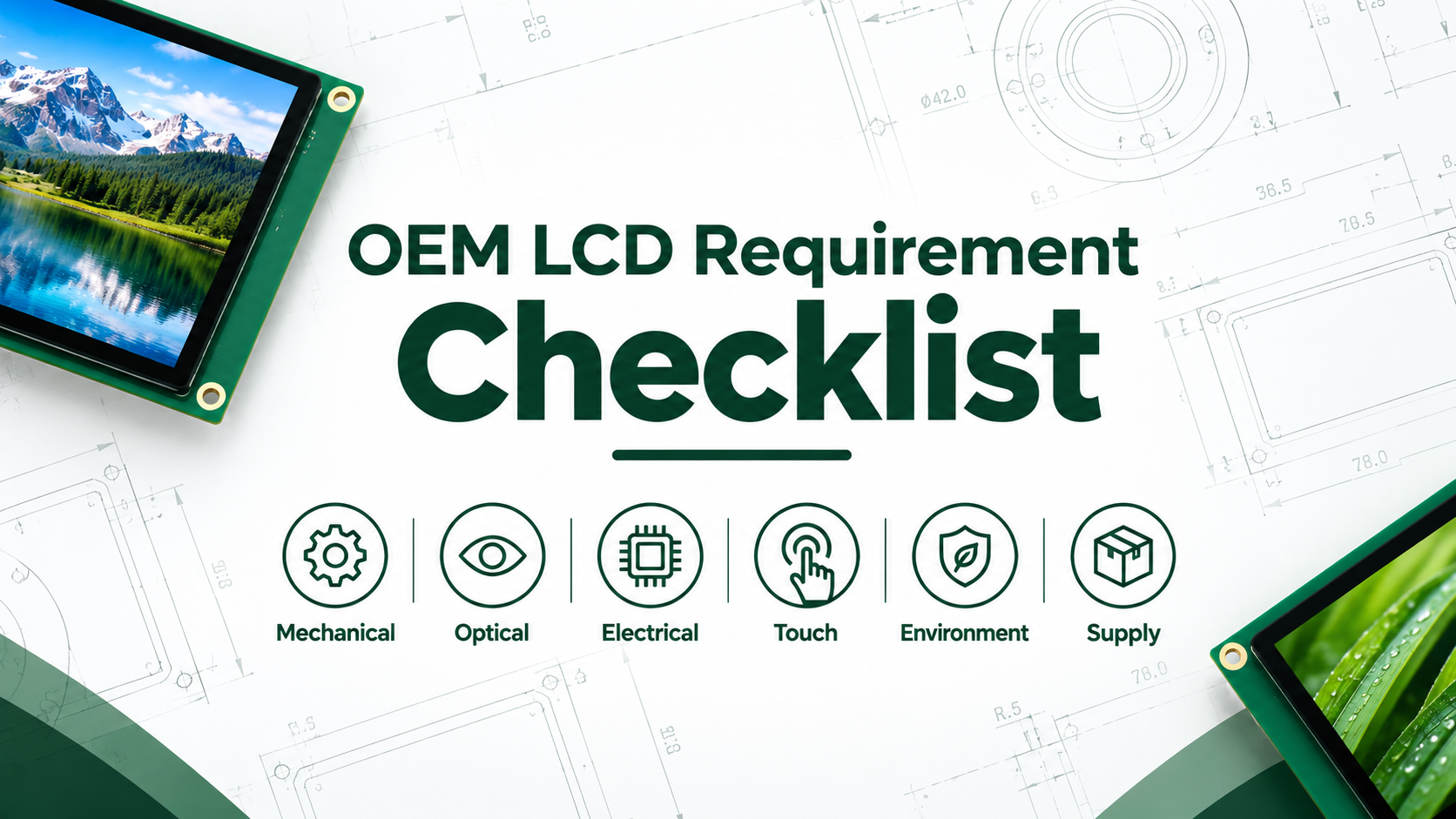
Mechanical requirements
Record the maximum module width, height and thickness, active area, mounting method, connector location and FPC direction. Note any keep-out zones, bezel restrictions or unusual enclosure shapes. A controlled mechanical drawing is more reliable than a verbal description.
Optical requirements
Define resolution, brightness, viewing direction, viewing angle, contrast expectations and colour needs. Consider whether the display will be used indoors, outdoors or under strong overhead lighting. Decide whether AG, AR, AF treatment or optical bonding may be useful.
Electrical and interface requirements
List the supply voltages, logic level, backlight voltage, preferred connector and supported interface. Confirm whether the host system uses SPI, MCU, RGB, MIPI, LVDS or HDMI. Review total power consumption where the product is battery-driven.
Touch and cover-lens requirements
Choose non-touch, resistive or capacitive touch. For capacitive touch, consider cover-lens thickness, glove operation, water behaviour, controller interface and decorative printing. Define the cover-lens dimensions and any logo, window, hole or special shape.
Environmental and reliability requirements
Record operating and storage temperatures, expected vibration, shock, humidity, UV exposure and cleaning conditions. Medical, industrial, automotive and outdoor products may require different materials, tests or validation steps.
Commercial and lifecycle requirements
Provide sample quantity, expected annual volume, MOQ expectations, production schedule and target product lifetime. Ask about long-term availability, change notification and replacement planning. These factors influence whether a standard or project-based solution is appropriate.
How 4D LCD Can Help
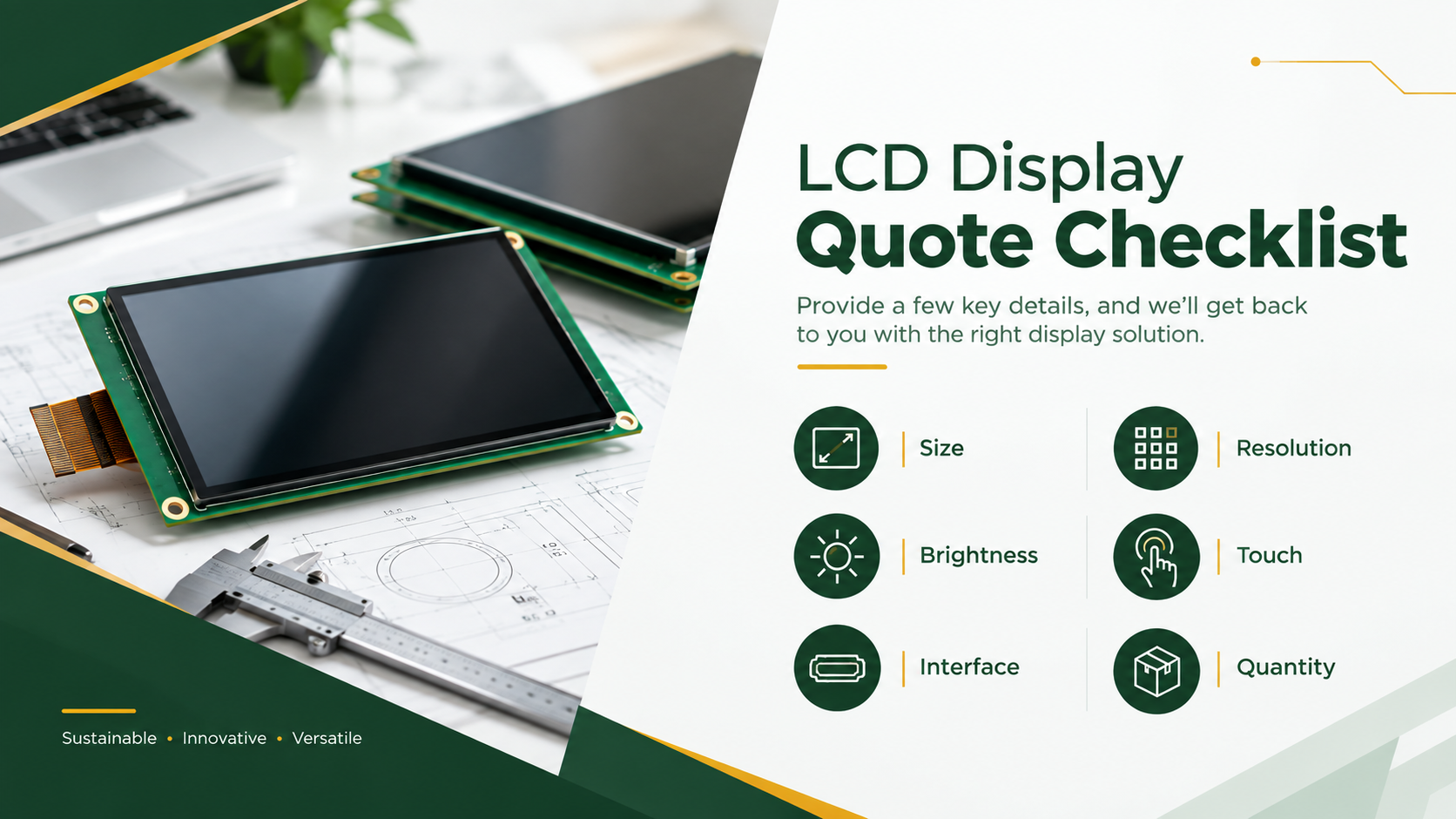
4D LCD supports customers from initial product selection and sample evaluation through customisation and production planning. Share the application, target size, interface, touch, brightness, environmental and volume requirements so the team can review suitable standard or custom display options.
Frequently Asked Questions
Why use an LCD requirement checklist?
It helps engineering, purchasing and suppliers work from the same information and reduces avoidable redesign.
What should be decided first?
Start with the application, available space, interface and viewing environment.
Does every project need a custom LCD?
No. The checklist should first be compared with standard products. Customisation is considered only where a gap remains.
When should lifecycle be discussed?
Before design approval, especially for products expected to remain in production for several years.
Related Display Resources
If your product needs a display tailored to its enclosure, interface or operating environment, review our custom LCD display solutions.
Learn more about our display technology capabilities for projects requiring reliable optical and electrical performance.
Once the checklist is complete, send your project requirements to 4D LCD for review.

4D LCD is a display solutions provider specialising in TFT LCD modules for industrial, medical, automation, instrumentation, embedded systems and electronic product applications. With both standard and customised display options, 4D LCD supports customers worldwide with reliable, application-focused display solutions.