
Do You Really Need Optical Bonding? Here's When It Matters (and When It Doesn't)
Optical bonding improves display clarity and durability but when is it worth it? We break it down.
Optical bonding is one of those terms that sounds impressive and it is. But not every display project needs it.
Here’s how to know if your product should include optical bonding or if it’s an upgrade you can skip.
First, What Is Optical Bonding?
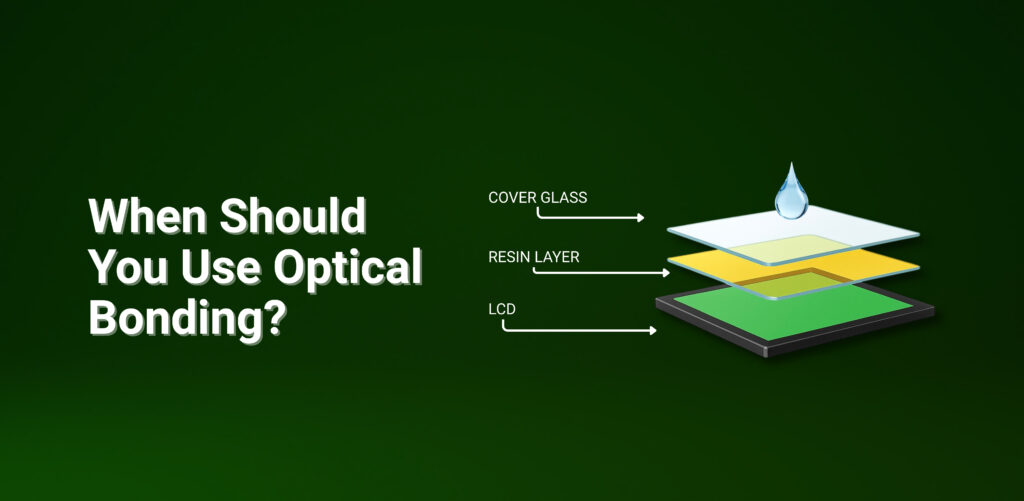
In a standard LCD, there’s usually an air gap between the screen and the cover lens. Optical bonding fills that gap with a transparent adhesive, creating a single optical layer.
The result? Better visibility, durability, and no fogging.
When You DO Need Optical Bonding
Outdoor Use
Bonding reduces internal reflections = better sunlight readability
Rugged/Industrial Use
Adds shock resistance and improves touchscreen durability
Marine / Humid Environments
Prevents fogging and moisture inside the panel
Touch Accuracy
Improves precision, especially in touch interfaces using gloves or styluses
When You DON’T Need It
- Indoor products without glare
- Enclosed devices with low exposure
- Projects with strict budgets
- Simple displays used only for readout (no interaction)
Can You Add It Later?
Yes, but it’s best to spec it early in your project.
We offer optical bonding as a factory-level or local service, depending on size and quantity.
If your application requires enhanced display clarity, improved durability, and excellent outdoor visibility, explore these TFT LCD displays that are well suited for optical bonding.
- 4.3″ TFT LCD Display – Ideal for portable industrial equipment, handheld medical devices, and outdoor control systems.
- 5.0″ TFT LCD Display – A versatile display for embedded applications, smart home interfaces, and industrial control panels requiring improved readability.
- 7.0″ TFT LCD Display – One of the most popular choices for industrial automation, transportation systems, marine electronics, and medical equipment.
- 10.1″ TFT LCD Display – Perfect for operator panels, kiosks, commercial equipment, and outdoor applications where visibility is critical.
- 15.0″ TFT LCD Display – Designed for industrial workstations, digital signage, and demanding environments that benefit from optical bonding.
Browse our complete TFT LCD Product Range to explore displays that can be customized with optical bonding.
Talk to us if you’re unsure. We’ll help you decide if bonding fits your environment and budget.

4D LCD provides advanced TFT LCD display solutions for industrial, medical, automation, instrumentation, embedded and other electronic applications, with standard and customised display options for customers worldwide.